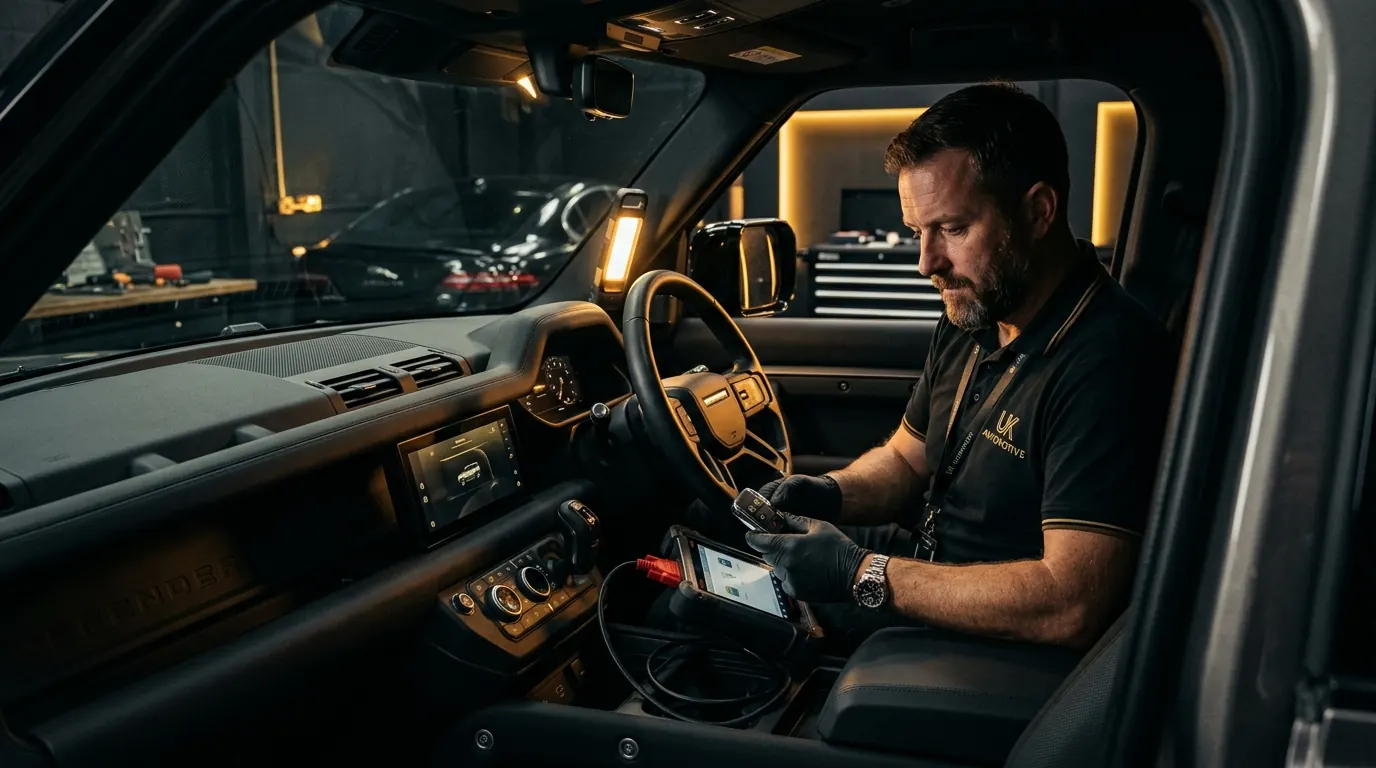

When a key goes missing from a company vehicle, the priority is simple: secure the vehicle, check whether a spare is available, and arrange a replacement as quickly as possible. For businesses operating vans or company cars in London and surrounding areas, a lost key is not just an inconvenience. It can mean delayed deliveries, missed appointments, disrupted schedules, and unnecessary vehicle downtime.
Fleet key incidents can happen more easily than many business owners expect. A driver may misplace a key during a job, leave it somewhere after a delivery, lock it inside a van, or discover that a remote fob has suddenly stopped working.
Without a clear process, a relatively small key problem can quickly become a larger operational issue.
The good news is that managing lost vehicle keys across a business fleet does not have to be complicated. With clear reporting procedures, secure spare-key management, and access to a mobile automotive locksmith, many incidents can be resolved quickly without unnecessarily taking a vehicle out of service.
London Auto Locksmith helps businesses in London and surrounding areas with practical automotive locksmith solutions, including locksmith services for fleet management. The focus is simple: fast response, on-site solutions, and helping businesses get their vehicles back on the road.
Why Lost Keys Are a Bigger Problem for Fleets Than Individual Vehicles
For a private driver, losing a car key is frustrating. For a business operating several vans or company vehicles, it can quickly become a logistical and financial problem.
Fleet security, driver productivity, delivery schedules, and customer commitments can all be affected when one vehicle becomes unavailable.
Business vehicles may move continuously between offices, customer addresses, construction sites, delivery locations, and other parts of in London and surrounding areas. When keys are not properly managed, it becomes much easier for them to be misplaced or lost during a busy working day.
That is why businesses operating multiple vehicles benefit from having a clear fleet key management process.
Vehicle Downtime and Operational Disruption
One of the biggest problems caused by lost vehicle keys is downtime.
If a driver loses a key during a working day, the vehicle may be unable to move until a replacement is arranged. For businesses that rely on vans for deliveries, installations, maintenance, construction, or field services, even a short delay can affect the rest of the day's schedule.
A single unavailable van may mean:
- Deliveries need to be rescheduled
- Another driver has to be reassigned
- Customer appointments are delayed
- Routes need to be reorganised
- Employees spend time dealing with the key problem instead of their normal work
For companies operating in London and surrounding areas, a mobile vehicle locksmith can be particularly useful because the replacement can potentially be carried out at the vehicle's location.
Security Risks and Unauthorised Vehicle Access
A lost vehicle key can also create a security concern.
If the key was lost in a public location and there is a possibility that someone else could find it, the business may need to consider whether additional security measures are necessary.
Modern vehicles use electronic immobilisers and transponder systems. Depending on the vehicle, lost keys may be able to be removed from the vehicle's key memory or replaced through professional programming.
This can be particularly important for business vehicles that contain tools, equipment, stock, or other valuable items.
For businesses managing multiple vehicles, responding quickly to lost keys is therefore not only about keeping the fleet moving. It is also about maintaining appropriate vehicle security.
Replacement Costs Across Different Vehicle Types
The cost of replacing a fleet vehicle key depends on the vehicle and key system involved.
Older vehicles may use relatively simple mechanical keys, while newer vans and cars can use remote fobs, transponder keys, smart keys, or keyless systems.
Typical categories include:
- Basic mechanical keys: generally simpler to replace
- Remote key fobs: require electronic components and programming
- Transponder keys: require immobiliser programming
- Smart or keyless systems: may require more advanced programming
Because business fleets often contain different vehicle makes and models, working with a specialist that provides van key replacement services can make the process easier.
A mobile locksmith can also potentially reduce downtime by attending the vehicle rather than requiring the business to arrange transportation to another location.
What To Do Immediately When a Fleet Vehicle Key Is Lost
When a driver reports a missing key, the most important thing is to act quickly.
A simple fleet key-loss procedure can help managers avoid confusion and make sure everyone knows what to do next.
The main priorities should be:
- Confirm whether the key is genuinely lost
- Check whether a spare is available
- Secure the vehicle
- Assess any security concerns
- Arrange a replacement if necessary
Confirm the Loss and Check Spare Keys
Before assuming the key is permanently lost, ask the driver to retrace their steps.
Check:
- The vehicle interior
- The driver's clothing and bags
- The previous job location
- Customer premises
- Delivery locations
- Depot or office areas
- Places visited earlier during the shift
At the same time, check whether the business has a spare key.
Maintaining at least one securely stored spare key for each fleet vehicle can make a significant difference when an incident occurs.
If a spare is available, it may allow the vehicle to return to service while a permanent replacement is arranged.
Secure the Vehicle and Assess the Risk
If the key cannot be found, the next priority is vehicle security.
Consider where the key was lost and whether somebody else could potentially identify the vehicle associated with it.
For example, a key lost inside a secure business premises may present a different level of risk from a key lost in a busy public location.
If there is a genuine security concern, a professional automotive locksmith may be able to advise whether the vehicle's key system can be reprogrammed so that the missing key is no longer authorised.
This can be particularly important for commercial vehicles carrying tools, equipment, stock, or business materials.
Arrange Fast Key Replacement
Once the situation has been assessed, arrange a replacement as soon as practical.
Many businesses assume that a replacement key must always be obtained from a main dealer. Depending on the vehicle, a mobile automotive locksmith may be able to cut and program a replacement key at the vehicle's location.
This can be useful for businesses operating in London and surrounding areas because the vehicle may not need to be transported elsewhere.
For companies that depend on their vehicles every working day, reducing unnecessary downtime can make a significant difference.
How Fleet Vehicle Key Replacement Actually Works
Modern vehicle keys are much more than pieces of metal.
Many contain electronic transponders, remote controls, or smart-key technology that communicates with the vehicle's security system.
As a result, replacing a lost key may involve both physical key cutting and electronic programming.
Cutting and Programming Modern Vehicle Keys
Depending on the vehicle, a replacement process may involve:
- Identifying the correct key type
- Obtaining or decoding the required key information
- Cutting the physical key blade where applicable
- Programming the transponder
- Programming the remote functions
- Testing the replacement key
- Checking that the vehicle starts and locks correctly
The exact process varies between manufacturers, models, years, and security systems.
For businesses operating multiple vehicle types, having access to a specialist automotive locksmith can simplify the process.
London Auto Locksmith also provides vehicle immobiliser support for situations where the issue involves the vehicle's electronic security system.
Dealer vs Mobile Locksmith Replacement
A dealership can be one option for replacing a vehicle key, but it is not always the most convenient option for a working fleet.
A dealership replacement may involve:
- Booking an appointment
- Arranging transportation for the vehicle
- Waiting for a replacement key
- Returning to the dealership for programming
A mobile automotive locksmith may instead be able to attend the vehicle directly.
For a company van parked at a customer location, roadside location, workplace, or another part of in London and surrounding areas, this can be a practical alternative.
The best option depends on the vehicle, key system, availability, and complexity of the job.
Reprogramming or Deactivating Lost Keys
In some situations, replacing the physical key is only part of the solution.
If the original key has been genuinely lost and there is a concern that somebody else could use it, a qualified technician may be able to reprogram the vehicle's security system so that the missing key is no longer authorised.
Depending on the vehicle, this can involve:
- Removing an old key from the vehicle's memory
- Programming a replacement key
- Programming the remote
- Checking the immobiliser
- Testing the new key
This can provide an additional layer of security for businesses that have lost keys outside their normal premises.
Building a Fleet Key Management System That Prevents Future Loss
Replacing a lost key solves the immediate problem, but businesses should also consider why keys are being lost and how future incidents can be reduced.
A structured fleet key management system can improve accountability, reduce downtime, and make it easier to respond when something goes wrong.
Centralised Key Storage and Tracking
When vehicles return to a depot or business premises, keys should ideally be stored in a secure and clearly organised location.
Depending on the size of the fleet, this could involve:
- A secure key cabinet
- Clearly labelled key hooks
- Electronic key storage
- Driver sign-out procedures
- Digital fleet records
Each key should be associated with the correct vehicle so that managers can quickly identify missing keys.
For larger fleets, electronic systems can provide additional records showing who accessed a particular key and when.
Assigning Key Responsibility to Drivers
Drivers should understand who is responsible for the vehicle key during their shift.
A simple policy can specify:
- Where the key should be kept
- When it should be returned
- Who should have access to it
- What happens if the key is lost
- How quickly a missing key must be reported
Clear responsibility makes it easier to identify problems and respond quickly.
Maintaining Spare Keys for Every Vehicle
A spare key can be one of the simplest ways to reduce fleet downtime.
If a business has only one key for a vehicle and that key disappears, the vehicle may immediately become unavailable.
Keeping securely stored spare keys for fleet vehicles gives managers another option while a replacement is being arranged.
Spare keys should be stored securely and access should be limited to authorised staff.
Technology That Helps Manage Fleet Keys
Larger fleets may benefit from technology that improves key tracking and access control.
Traditional key cabinets and manual records can work for smaller businesses, while larger organisations may consider electronic systems.
Electronic Key Cabinets and Audit Logs
Electronic key cabinets can restrict access to authorised users and record when keys are removed or returned.
Depending on the system, records may show:
- Which employee accessed the key
- Which vehicle the key belongs to
- When the key was removed
- When it was returned
This can make fleet key tracking easier and provide better visibility for fleet managers.
Digital or Phone-Based Vehicle Access
Some modern vehicles support digital access systems where authorised drivers can use a smartphone or digital credential instead of a traditional physical key.
Depending on the system, businesses may be able to manage:
- Driver access
- Vehicle assignments
- Access permissions
- Digital records
However, availability depends entirely on the vehicle and manufacturer's technology.
Fleet Software Integration
Businesses managing larger fleets may also integrate vehicle access information into their existing fleet management systems.
Combining vehicle information, driver records, scheduling, maintenance, and key tracking can make it easier for managers to understand which vehicle and key are assigned to each driver.
Technology cannot eliminate every lost-key incident, but it can reduce confusion and improve accountability.
Best Practices for Businesses Managing Vans and Company Vehicles
A strong fleet key system does not need to be complicated.
The most important thing is consistency.
Create a Clear Lost Key Protocol
Every driver should know what to do if a vehicle key disappears.
A simple process could be:
- Report the missing key immediately
- Confirm the last known location
- Check for a spare
- Secure the vehicle
- Assess any security concern
- Contact an automotive locksmith if necessary
- Record the incident
Having a defined process prevents drivers from waiting too long before reporting the problem.
Conduct Regular Key Audits
Regular checks can identify missing keys before they become an emergency.
Fleet managers can confirm that:
- Every vehicle has its assigned key
- Spare keys are available
- Keys are correctly labelled
- Returned keys are stored correctly
- Missing keys are reported
Regular audits are particularly useful for businesses with multiple drivers or vehicles.
Train Staff to Report Issues Immediately
Drivers may sometimes delay reporting a missing key because they hope it will turn up.
That can make the situation worse.
Encourage drivers to report lost keys immediately so that the business can assess the risk and arrange a solution before the vehicle remains unavailable for longer than necessary.
When to Call a Professional Automotive Locksmith
Even a well-organised fleet will occasionally experience lost, damaged, or locked-in keys.
Modern vehicle security systems can make these situations difficult to resolve without specialist equipment.
For businesses operating vans and company cars in London and surrounding areas, having access to a professional mobile automotive locksmith can help reduce unnecessary downtime.
Lost Keys With No Spare Available
If a driver has lost the only available key and no spare exists, a mobile locksmith may be able to create and program a replacement at the vehicle's location.
This can be particularly useful for commercial vehicles that need to return to work quickly.
Smart Keys and Electronic Key Systems
Modern vehicles may use smart keys, transponders, remote locking, or keyless-start systems.
A replacement may therefore require electronic programming rather than simple key cutting.
London Auto Locksmith provides smart key services and related vehicle key solutions for a range of modern vehicles.
Keys Locked Inside Vehicles
Fleet drivers can also accidentally lock their keys inside a van or company car during a delivery or service visit.
A professional automotive locksmith can use appropriate vehicle-entry methods to regain access while aiming to avoid unnecessary damage.
For businesses operating throughout in London and surrounding areas, mobile assistance can be especially useful when the vehicle is located away from the company's main premises.
Keeping Your Fleet Moving When Keys Go Missing
Lost vehicle keys are an unavoidable possibility for businesses operating busy fleets.
Drivers move between locations, vehicles change hands, and keys can occasionally disappear.
What matters is how quickly the business can respond.
A combination of:
- Clear fleet key procedures
- Secure spare-key storage
- Driver accountability
- Regular key audits
- Effective key tracking
- Professional automotive locksmith support
can significantly reduce the disruption caused by lost fleet keys.
For businesses operating vans and company vehicles in London and surrounding areas, having a reliable mobile locksmith available can help resolve lost keys, replacement keys, locked-in keys, and related vehicle security issues without unnecessarily taking vehicles out of service.
London Auto Locksmith provides mobile automotive locksmith support for businesses and fleet operators in London and surrounding areas, including van key replacement, car key programming, vehicle access, and related key services.
When a fleet vehicle loses its key, the goal is simple: secure the vehicle, minimise downtime, and get the driver back on the road as efficiently as possible.